




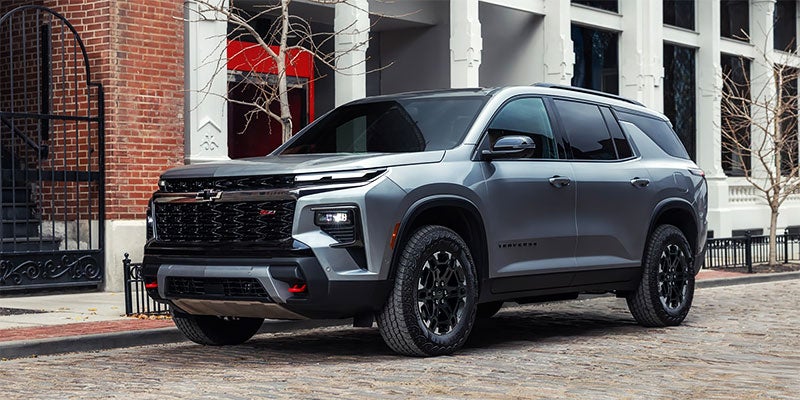
The 2027 Chevrolet Traverse LT and Z71 offer two different approaches to three-row family SUV driving. The LT emphasizes everyday comfort, flexible seating for seven or an available eight passengers, and modern technology, including a standard 17.7-inch infotainment touchscreen. The Z71 adds standard advanced twin-clutch all-wheel drive, an off-road-tuned suspension, all-terrain tires, Terrain Mode, and Hill Descent Control for drivers seeking additional capability on suitable rough or slippery surfaces. When comparing the 2027 Chevy Traverse LT vs. Z71, both provide a 328-horsepower turbocharged engine, generous cargo capacity, and advanced safety technology. The biggest differences involve AWD equipment, seating configurations, suspension design, and everyday driving priorities.
For families around McKeesport, White Oak, West Mifflin, and Homestead, the right Traverse depends on how often you carry passengers, where you drive, and whether you need additional traction-oriented equipment. The LT may provide everything you need for commuting, shopping, and family transportation. The Z71 may be worth considering if your routine includes gravel roads, changing winter conditions, or outdoor recreation. Here's how these two 2027 Chevrolet Traverse trim levels compare.
2027 Chevrolet Traverse LT vs. Z71: Key Differences
The Traverse LT and Z71 share the same basic platform and engine. However, Chevrolet equips the Z71 with specialized AWD and suspension components, while the LT provides more flexibility in drivetrain selection and passenger seating.
| Feature | 2027 Traverse LT | 2027 Traverse Z71 |
|---|---|---|
| Primary Focus | Everyday family comfort and versatility | Rugged styling and additional rough-road capability |
| Engine | 2.5L turbocharged 4-cylinder | 2.5L turbocharged 4-cylinder |
| Horsepower | 328 hp | 328 hp |
| Torque | 326 lb-ft | 326 lb-ft |
| Transmission | 8-speed automatic | 8-speed automatic |
| Drivetrain | Front-wheel drive or available AWD | Standard advanced twin-clutch AWD |
| Suspension | Standard road-oriented suspension | Off-road-tuned suspension |
| Wheels and Tires | 18-inch wheels with road-oriented tires | 18-inch wheels with all-terrain tires |
| Special Driving Features | Standard traction and stability technologies | Terrain Mode and Hill Descent Control |
| Underbody Protection | Standard vehicle equipment | Additional skid plate |
| Seating Capacity | 7 passengers; available 8-passenger configuration | 7 passengers |
| Infotainment Touchscreen | 17.7-inch diagonal | 17.7-inch diagonal |
| Driver Information Display | 11-inch diagonal | 11-inch diagonal |
| Maximum Cargo Volume | Up to 98 cu. ft. | Up to 98 cu. ft. |
| Maximum Towing Capacity | Up to 5,000 lbs. when properly equipped | Up to 5,000 lbs. when properly equipped |
| Best Suited For | Commuting, errands, larger families, and everyday travel | Families wanting additional AWD and rough-road equipment |
The Z71's specialized drivetrain is its primary advantage. However, the LT offers the same engine output, infotainment screen size, and maximum cargo space, making it worth considering if you don't regularly need the additional capability.
Quick Answer: Should You Choose the Traverse LT or Z71?
Choose the 2027 Chevrolet Traverse LT if you want a comfortable three-row SUV for everyday family transportation. It offers available eight-passenger seating, flexible cargo room, a large infotainment screen, and the choice of front-wheel drive or AWD.
Choose the 2027 Chevrolet Traverse Z71 if you want standard advanced twin-clutch AWD, all-terrain tires, an off-road-tuned suspension, and additional traction features for appropriate gravel, snowy, or uneven surfaces.
Both are practical family SUVs. The Z71 doesn't provide more horsepower or more seating, so the value of upgrading depends on how much you'll use its specialized capability.
Engine Performance: Does the Traverse Z71 Have More Horsepower Than the LT?
No. Both the 2027 Chevrolet Traverse LT and Z71 use the same 2.5-liter turbocharged four-cylinder engine producing 328 horsepower and 326 lb-ft of torque.
Both pair that engine with an eight-speed automatic transmission.
This means choosing the Z71 does not provide an engine horsepower upgrade over the LT.
Instead, the differences in how the vehicles drive come from their drivetrain configurations, suspension tuning, and tire selection.
Traverse LT: Everyday Power and Comfort
The LT's turbocharged engine provides power for highway merging, commuting, and transporting passengers.
Whether you're traveling along Route 48, driving around White Oak, or making regular trips into the greater Pittsburgh area, the LT provides the same rated horsepower as the Z71.
Drivers who primarily use paved streets and highways may find that the LT offers the performance and comfort they need without the Z71's additional off-road equipment.
Traverse Z71: Same Engine, Different Drivetrain
The Z71 pairs the turbocharged engine with its advanced twin-clutch AWD system.
That drivetrain, combined with the Z71's off-road suspension and all-terrain tires, creates a different driving experience when traction conditions become more challenging.
However, the Z71 is not designed to be a more powerful version of the LT. It is designed to offer additional capability through specialized equipment.
AWD Comparison: What Makes the Traverse Z71 Different?
Both Traverse trims can provide all-wheel-drive capability, but their systems are not identical.
The LT offers available AWD, while the Z71 includes a more advanced twin-clutch system as standard equipment.
2027 Chevrolet Traverse LT Available AWD
The Traverse LT is available with front-wheel drive or all-wheel drive.
Choosing an AWD LT can provide additional traction during acceleration when conditions are slippery or road surfaces have reduced grip.
For drivers dealing with rainy weather, occasional snow, or ordinary paved-road commuting around McKeesport, an AWD LT may provide the traction capability they want.
This is worth considering before upgrading to the Z71 solely because it includes AWD.
2027 Chevrolet Traverse Z71 Advanced Twin-Clutch AWD
The Z71 includes Chevrolet's advanced twin-clutch AWD system, which can manage torque distribution between the rear wheels to help improve traction and vehicle response under appropriate conditions.
Unlike a basic system that distributes power between the front and rear axles, twin-clutch technology provides additional control over how torque is delivered across the rear axle.
This may be helpful when one side of the vehicle encounters a surface with less available traction than the other.
For families who regularly travel on gravel roads, uneven access routes, or other appropriate low-grip surfaces, this additional capability may be useful.
Is Twin-Clutch AWD the Same as Four-Wheel Drive With 4LO?
No. The Traverse Z71 uses an advanced all-wheel-drive system, not a traditional truck-style four-wheel-drive system with a dedicated low-range transfer case.
Its drivetrain is designed to support traction and handling under various conditions, but it should not be treated as equivalent to a specialized body-on-frame off-road vehicle.
The Z71's equipment expands the Traverse's versatility without changing its basic role as a three-row family SUV.
What Off-Road Features Come With the 2027 Traverse Z71?
The Z71 includes several features not found in the standard LT configuration.
- Advanced Twin-Clutch AWD: Helps manage torque distribution for improved traction in appropriate conditions.
- Off-Road-Tuned Suspension: Adds suspension tuning intended for a wider range of suitable road surfaces.
- 18-Inch Wheels With All-Terrain Tires: Provides a tire configuration better suited to certain loose and uneven surfaces.
- Terrain Mode: Adjusts applicable vehicle responses for certain low-speed driving situations.
- Hill Descent Control: Helps manage vehicle speed on appropriate downhill surfaces.
- Skid Plate: Provides added protection for applicable underbody components.
What Does Terrain Mode Do?
Terrain Mode is a specialized drive setting included on the Z71.
It adjusts applicable drivetrain and vehicle responses to help manage certain low-speed driving conditions.
This can be useful when navigating suitable uneven or loose surfaces where smooth, controlled movement matters.
Terrain Mode does not allow the vehicle to ignore traction limits or safely travel across every type of obstacle.
How Does Hill Descent Control Help?
Hill Descent Control is designed to help the driver maintain a controlled speed on certain downhill grades when the system's operating conditions are met.
This may be helpful on suitable steep access roads or other lower-speed descents.
Drivers must still steer, monitor the surroundings, and remain responsible for safe vehicle operation.
Does the Z71 Have More Ground Clearance?
The Z71's suspension and tire configuration gives it a slightly taller stance than the standard Traverse LT.
Its off-road-focused suspension works with the skid plate and all-terrain tires to provide additional capability for suitable uneven surfaces.
However, the Traverse Z71 remains a midsize crossover SUV, and its ground clearance and approach angles still impose practical limits.
It should not be used on challenging terrain without considering those limitations.
Which Traverse Is Better for Pennsylvania Snow and Rain?
Both the LT and Z71 can be useful choices for Western Pennsylvania drivers, but the right configuration depends on the conditions you expect to encounter.
AWD Traverse LT for Everyday Winter Driving
An LT equipped with available AWD can help provide traction during acceleration on certain slippery surfaces.
For drivers who primarily use maintained roads around McKeesport, White Oak, and West Mifflin, this may be sufficient for their everyday needs.
Tire condition and type remain especially important in snow and freezing temperatures.
Traverse Z71 for Changing Surfaces
The Z71's standard twin-clutch AWD and all-terrain tires provide additional traction-oriented equipment.
This may appeal to drivers who regularly encounter gravel driveways, uneven surfaces, or roads with varying traction conditions.
However, all-terrain tires are not automatically the same as dedicated winter tires.
Neither AWD system eliminates sliding on ice or guarantees shorter stopping distances. Appropriate tires, reduced speed, and adequate following distance are essential for either vehicle.
Interior Comfort: Does the Traverse LT or Z71 Have More Room?
Both trims provide a spacious three-row interior with room for families, passengers, and cargo.
However, the seating configurations are different, and that can be one of the most important buying considerations.
Traverse LT: Available Eight-Passenger Seating
The 2027 Traverse LT offers seating for seven passengers with second-row captain's chairs or up to eight passengers with the available second-row bench seat.
That extra seat can make a difference for larger households, families who carpool, or drivers who regularly transport additional passengers.
The LT also includes Smart Slide second-row seating functionality to help provide access to the third row.
For shoppers who need eight seats, the LT is the better match between these two trims.
Traverse Z71: Seven-Passenger Layout
The Traverse Z71 seats seven passengers across three rows.
It features second-row captain's chairs, creating a passage between the seats for third-row access.
This configuration may work well for smaller families who value easier movement between seating rows and don't need an eighth seat.
The Z71 also includes distinctive interior styling designed to complement its rugged exterior character.
Which Seating Arrangement Is More Practical?
If you frequently carry eight passengers, the LT with the available second-row bench is the clear choice.
If seven seats are enough, both trims offer practical family transportation.
Families with younger children should compare child-seat placement, third-row access, and second-row seating layouts in person before deciding.
Cargo Space: Is the Traverse Z71 Bigger Than the LT?
No. Both trims offer approximately the same maximum cargo capacity because they share the Traverse's overall vehicle platform.
Chevrolet lists:
- 22.9 cubic feet of cargo space behind the third row.
- 56.6 cubic feet behind the second row with the third row folded.
- Up to 98 cubic feet of maximum cargo volume with the appropriate rear seats folded.
This means the Z71 doesn't provide a larger cargo area simply because it features off-road-oriented equipment.
Whether you're loading sports equipment, groceries, strollers, luggage, or recreational supplies, both trims offer substantial flexibility.
If you regularly transport a full cabin of passengers, remember that cargo space behind the third row will be smaller than the maximum advertised volume.
Technology: Do the LT and Z71 Have the Same Touchscreen?
Yes. Both the 2027 Chevrolet Traverse LT and Z71 include Chevrolet's 17.7-inch diagonal infotainment touchscreen.
Both also include an 11-inch diagonal Driver Information Center, providing a separate digital display for important driving information.
The infotainment system supports Google built-in compatibility and modern connectivity features, with certain functions requiring applicable subscriptions, devices, or data services.
That means the Z71's additional purchase cost isn't primarily for a larger screen or a more powerful engine.
Instead, buyers are paying for specialized AWD hardware, off-road-focused suspension equipment, tires, and other Z71 features.
AutoSense Power Liftgate
Both trims include an AutoSense Power Liftgate designed to provide convenient access to the rear cargo area when the required conditions are met.
This can be useful when loading groceries, luggage, or other family supplies.
Smartphone and Connected Technology
The Traverse offers wireless smartphone connectivity, wireless phone charging, and connected technology features.
Equipment and compatible-service requirements may vary, so review the specific vehicle's window sticker and connected-service information before purchasing.
Safety and Driver-Assistance Features
Chevrolet equips the 2027 Traverse lineup with more than 20 standard safety and driver-assistance technologies.
Depending on the equipment and configuration, the Traverse offers technologies such as:
- Forward Collision Alert.
- Enhanced Automatic Emergency Braking.
- Front Pedestrian and Bicyclist Braking.
- Blind Zone Steering Assist.
- Lane Keep Assist with Lane Departure Warning.
- Adaptive Cruise Control.
- Rear Cross Traffic Braking.
- Available HD Surround Vision.
These features can provide additional assistance during everyday travel, but they do not eliminate the need for attentive driving.
If you're comparing individual LT and Z71 vehicles, review the actual safety equipment and optional packages rather than assuming every vehicle has identical features.
Towing Capability: Can the Traverse LT and Z71 Tow the Same Amount?
Both the 2027 Chevrolet Traverse LT and Z71 offer a maximum towing capacity of up to 5,000 pounds when properly equipped.
This makes either trim worth considering for certain lightweight recreational trailers, small boats, or utility trailers that fall within the vehicle's actual towing limits.
The Z71's twin-clutch AWD system may provide additional traction in appropriate conditions, but it does not automatically give the Z71 a higher towing rating than the LT.
For shoppers who primarily tow on maintained roads, a properly equipped LT may provide the capability they need.
If a trailer will regularly be used on gravel or uneven access roads, the Z71's additional traction-oriented equipment may be worth considering.
Always verify the specific vehicle's tow rating, trailer weight, tongue weight, passenger load, and other manufacturer limits before towing.
Ride Comfort: Is the Traverse LT or Z71 Smoother?
Both vehicles are designed to provide comfortable three-row transportation, but their suspension and tire configurations can create differences in how they feel on the road.
Traverse LT Ride Characteristics
The LT uses a suspension setup focused on ordinary paved-road driving.
For families commuting through McKeesport, traveling along Route 48, or handling daily errands around White Oak, this may provide the balance of comfort and practicality they prefer.
Its road-oriented tire configuration is also worth considering when comparing cabin noise and ride feel.
Traverse Z71 Ride Characteristics
The Z71 uses an off-road-tuned suspension and all-terrain tires.
Those features are intended to provide additional capability on suitable uneven surfaces, but they may produce a different driving feel from the LT on pavement.
Tire design, vehicle equipment, and road conditions can affect ride firmness, steering response, and noise.
Neither trim should automatically be considered smoother in every situation. Comparing both during a test drive is the most useful way to evaluate ride comfort.
Which Traverse Fits Everyday Driving Around McKeesport?
McKeesport: Commuting and Family Transportation
For drivers around McKeesport, the Traverse LT may provide a practical combination of passenger space, technology, and everyday comfort.
Families who need up to eight seats may especially appreciate the LT's available second-row bench configuration.
The Z71 may appeal to those who want standard advanced AWD and a more rugged appearance, even if the vehicle is primarily used for daily commuting.
White Oak: Local Roads and Daily Errands
Drivers around White Oak may spend much of their time on neighborhood streets, local roads, and regional highways.
The LT offers practical three-row seating and useful cargo flexibility for errands, school activities, and everyday transportation.
If additional AWD capability is important, shoppers can compare an AWD-equipped LT with the Z71 rather than assuming the LT is only available with front-wheel drive.
West Mifflin: Winter Driving and Changing Conditions
Western Pennsylvania winters can bring snow, ice, slush, and changing pavement conditions.
Drivers around West Mifflin may appreciate the availability of AWD on the LT or the Z71's standard twin-clutch system.
However, winter capability depends on more than drivetrain equipment. Tire selection, road conditions, and careful driving remain essential.
If winter traction is a priority, compare the actual tires installed on each vehicle and consider whether dedicated winter tires are appropriate.
Homestead: Highway Travel and Family Activities
For families traveling around Homestead and toward Pittsburgh, passenger comfort, cargo space, and technology may be more important than specialized off-road equipment.
The LT provides the same engine output, 17.7-inch touchscreen, and maximum cargo capacity as the Z71.
Shoppers who prioritize a comfortable cabin for regular highway driving may find that the LT already meets their needs.
Weekend Trips Around Western Pennsylvania
Weekend recreation may involve carrying luggage, sports equipment, camping supplies, or traveling on gravel access roads.
The LT provides generous cargo space and flexible seating for those activities.
The Z71's off-road suspension, all-terrain tires, and specialized AWD system may offer additional advantages when the destination involves suitable rougher surfaces.
If your weekend travel is primarily on paved roads, the LT may provide all the versatility you need.
Is the 2027 Chevrolet Traverse Z71 Worth the Upgrade Over the LT?
The Z71 may be worth the higher purchase cost if you'll regularly use its specialized traction features and prefer its rugged styling.
Standard advanced twin-clutch AWD, off-road suspension, Terrain Mode, all-terrain tires, and Hill Descent Control are meaningful differences.
However, many families primarily need comfortable transportation, passenger seating, cargo space, and useful technology.
Those buyers may find that the LT provides an excellent combination of everyday features without paying for additional capability they rarely use.
Does an AWD Traverse LT Narrow the Difference?
Yes. An LT equipped with available AWD may be a practical alternative for shoppers who want additional traction during ordinary winter driving without selecting the complete Z71 package.
However, the LT's available AWD system is not identical to the Z71's advanced twin-clutch system.
Drivers who regularly encounter suitable uneven or low-grip surfaces may still value the Z71's additional equipment.
What Should You Compare Before Buying?
When reviewing available Traverse models, consider:
- Whether you need seven or eight passenger seats.
- How often you drive on gravel, unpaved, or uneven roads.
- Whether available AWD on an LT meets your needs.
- Which tires and suspension configuration you prefer.
- The equipment and packages included on the actual vehicles.
- The difference in purchase price between similarly equipped models.
- Whether you prioritize everyday comfort or specialized traction capability.
Comparing actual window stickers and driving both trims can help you determine whether the Z71's additional equipment is worth the difference for your family.
Should You Choose the 2027 Traverse LT or Z71?
Choose the Traverse LT If You:
- Want a comfortable SUV for daily family transportation.
- Need available eight-passenger seating.
- Prefer the option of FWD or AWD.
- Primarily travel on paved roads and highways.
- Want a standard 17.7-inch infotainment touchscreen.
- Value flexible cargo space for errands and travel.
- Prefer a generally lower starting purchase cost.
Choose the Traverse Z71 If You:
- Want standard advanced twin-clutch AWD.
- Prefer all-terrain tires and rugged exterior styling.
- Regularly encounter suitable gravel or uneven roads.
- Want an off-road-tuned suspension and skid plate.
- Value Terrain Mode and Hill Descent Control.
- Need seven-passenger seating with captain's chairs.
- Want added traction-oriented equipment for outdoor travel.
Frequently Asked Questions About the 2027 Chevrolet Traverse LT and Z71
What is the main difference between the 2027 Chevy Traverse LT and Z71?
The LT emphasizes everyday comfort and flexible family seating, including available eight-passenger capacity. The Z71 includes standard advanced twin-clutch AWD, all-terrain tires, an off-road-tuned suspension, Terrain Mode, and Hill Descent Control. Both share the same 328-horsepower engine and maximum cargo capacity.
Does the 2027 Chevrolet Traverse LT come with AWD?
The Traverse LT comes with front-wheel drive or available all-wheel drive, depending on the selected configuration. The Z71 includes advanced twin-clutch AWD as standard equipment.
Is the Traverse Z71 better for off-road driving?
The Z71 is better equipped for appropriate rough-road conditions thanks to its advanced twin-clutch AWD system, off-road suspension, all-terrain tires, skid plate, Terrain Mode, and Hill Descent Control. However, it remains a midsize crossover SUV with practical terrain and ground-clearance limitations.
Does the 2027 Traverse Z71 have more horsepower than the LT?
No. Both trims use a 2.5-liter turbocharged engine producing 328 horsepower and 326 lb-ft of torque. The Z71's advantages involve drivetrain and suspension equipment rather than a more powerful engine.
Which 2027 Chevrolet Traverse can seat eight people?
The Traverse LT can seat up to eight passengers when equipped with the available second-row bench seat. The Z71 seats seven passengers with second-row captain's chairs.
Does the Traverse LT or Z71 have more cargo space?
Both provide up to approximately 98 cubic feet of maximum cargo space with the appropriate rear seats folded. The Z71 does not offer more maximum cargo room than the LT.
What does the Traverse Z71's twin-clutch AWD system do?
The advanced twin-clutch AWD system can manage torque distribution between the rear wheels to help support traction and vehicle response in appropriate conditions. It provides additional control compared with the LT's available conventional AWD configuration.
Is the Chevy Traverse Z71 good for snow?
The Z71 includes standard twin-clutch AWD and all-terrain tires, which may be useful in certain low-traction conditions. An AWD-equipped LT can also provide additional traction. Proper tires, reduced speed, and cautious driving remain essential for snow and ice.
Does the Traverse Z71 have a larger touchscreen?
No. Both the LT and Z71 feature a standard 17.7-inch diagonal infotainment touchscreen and an 11-inch diagonal driver information display.
Can the 2027 Chevy Traverse LT and Z71 tow 5,000 pounds?
Both offer a maximum towing capacity of up to 5,000 pounds when properly equipped. The actual towing limit depends on the vehicle configuration, trailer weight, and loading conditions.
Is the Traverse Z71 worth the extra cost over the LT?
It depends on how often you'll benefit from its specialized AWD system, off-road-tuned suspension, all-terrain tires, and additional traction features. If you primarily need a family SUV for paved-road commuting and everyday travel, an LT or AWD-equipped LT may provide the capability and comfort you need.
Where can I compare the 2027 Chevy Traverse LT and Z71 near McKeesport, PA?
Riverview Chevrolet McKeesport serves shoppers from McKeesport, White Oak, West Mifflin, Homestead, and surrounding communities. You can browse new Chevrolet inventory and schedule a test drive to compare available Traverse LT and Z71 vehicles.
Explore the 2027 Chevrolet Traverse at Riverview Chevrolet McKeesport
Whether you're interested in the Traverse LT's everyday family versatility or the Z71's advanced AWD capability, both offer three-row seating, substantial cargo space, and modern Chevrolet technology.
At Riverview Chevrolet McKeesport, shoppers from White Oak, West Mifflin, Homestead, and surrounding Western Pennsylvania communities can compare available Traverse models by drivetrain, seating, equipment, and trim.
Our team can help you review the available configurations, including LT models with AWD and Traverse Z71 vehicles equipped with specialized traction features.
Explore our new Chevrolet inventory to see available Traverse SUVs, or schedule a test drive to compare the differences in person.
Before choosing, consider how many passengers you usually carry, where you drive most frequently, and whether the Z71's additional AWD equipment will make a meaningful difference for your routine.
Vehicle specifications, standard and optional equipment, drivetrain availability, seating configurations, towing ratings, and inventory may vary. Maximum towing capacity is dependent on the specific vehicle and proper equipment. AWD, all-terrain tires, and driver-assistance technologies do not replace safe driving practices or appropriate tires for road conditions. The Traverse Z71 is equipped for certain off-road conditions but is subject to terrain, clearance, and manufacturer operating limitations. Review individual vehicle window stickers and contact Riverview Chevrolet McKeesport to confirm current equipment and availability.